The Space Between Living & Dying: An Interview With Jeremy Casella

January 20, 2009 at 9:53 pm

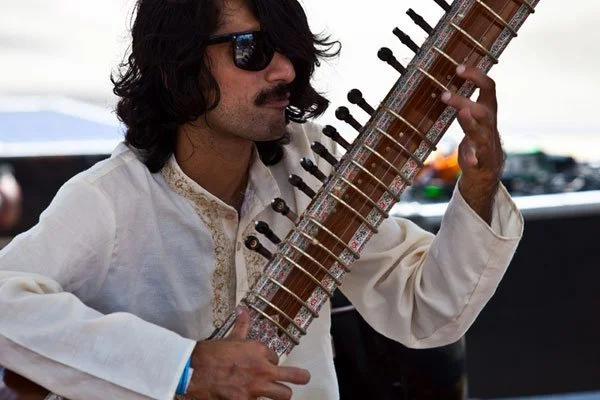
casellaI am very pleased to introduce the next installment of my ongoing interview series. Several years ago my wife and I had the chance of seeing Jeremy Casella open for Indelible Grace at Southern Seminary. Not only have we followed his career since then, we have been privileged to call him a friend. Jeremy released his new album Recovery (one of my favorites of the year!) independently earlier this year and is currently touring in support of the project. I recently caught up with Jeremy to talk about the new album and get his thoughts on a variety of issues. Enjoy:

  • Where and when were you born?

I was born in Lakeland, Florida on April 6th, 1976.

  • Were you raised in a musical home?

No. But when I showed interest in playing musical instruments my parents encouraged me to learn. Guitar lessons started when I was in 5th grade in downtown Pittsburgh. I learned some classical pieces and stopped playing until I was in 8th grade. All my friends were starting bands around this time and so I asked for a Fender Stratocaster for my birthday. I really wanted to be in a band but soon fell in love with the acoustic guitar and the singer/songwriter thing.

  • How has your family and upbringing impacted your art?

My parents divorced when I was very young. I’ve recently come to understand how deeply that has impacted me and my work. I think that my story is the palette from which I’ve always written my songs whether I’ve realized it or not. Even the melodies that don’t have any words.

  • Were you raised in a Christian home?

Yes.

  • Can you share a bit about your “salvation experience”? (i.e. testimony: how did you come to salvation?)

I became a believer when I was 8 years old at a summer camp in Pennsylvania. I started to understand the weight and gravity of my faith during college and shortly after.

  • When did you first become interested in music?

As far back as I can remember. I’ve always loved music.

  • Have you had formal musical training?

Yes. I minored in classical guitar in college and took piano lessons off and on during high school.

  • At what point did you realize that music was your life’s calling and at what point did you realize that it was actually feasible?

Fredrick Buechner says that your calling is the point at which your deepest gifting and the world’s deepest need meet. So that has sort of been my template in pursuing my music full-time. And feasible…art is never feasible. Life costs way too much money so you just have to jump in and say your prayers! Security is the underlying issue isn’t it? I mean we try to plan ahead and be smart with our resources but when push comes to shove I really have to fight to give the art a chance to exist. Most of the time I am constantly criticizing and tearing apart my songs & lyrics –even before I finish them…so I’m learning that balance of blind faith and respect for the process.

  • How does your faith affect your art?

It is the lens through which I see and create.

  • Are you actively involved in a local church? If so, which church? If not, why not?

Yes. My wife and I go to City Church of East Nashville.

  • Is your family supportive of your life choices? Does touring have a negative impact on your personal life?

My wife is really supportive. I couldn’t do this without her. Touring is hard but it’s part of the job so we’ve accepted it. I’m not sure how much longer I will continue to tour and travel but for now we’re committed to seeing this record through and touring it for a year and a half or so.

  • Has marriage or fatherhood changed your perspective on your art?

Completely. I agree with Andrew Osenga (read Andrew Osenga‘s interview here) on this one…I have a legacy now. I just want to tell the truth, you know? For my wife and son. For myself and my family and friends. There is a deeper sense of meaning and purpose that just wasn’t there for me in my work before I was married. I was too consumed with being cool or marketable. I once heard Phil Keaggy describe his marriage as “a place to rest when the world gets too loud”. That’s always stuck with me. I feel like I have that sort of peace in my relationship with Kierstin. My art is better for all of the changes that marriage and fatherhood have brought.

  • The first time my wife and I were introduced to your music, you were opening for and playing with Indelible Grace. How did your relationship with Indelible Grace come about and is it still active?

I got recruited as an electric guitarist during a few tours with them in years past. All the folks involved with those records are close friends of mine but up until that point I hadn’t worked on any of the albums. Matthew Smith is the guy who invited me to play on the tour with them. He’s an old friend and an excellent artist in his own right. I’ve since contributed to Indelible Grace 4 and 5 (which is a forthcoming release). I love those old hymns.

  • How would you describe the artistic progression from Alive Inside to Recovery?

I think it is like going from junior high to graduate school.

  • Recovery seems to be your most artistically ambitious album to date, where do you see your art going from here?

I have no idea. Someplace beautiful I hope. There is definitely another one brewing though so we’ll see. I would love to explore the idea of joy. I like the idea of trying to infuse music with specific emotional themes. Like writing a piece of music that thematically and organically communicates a specific emotional canvas.

  • Was it a tough adjustment working with strings and expanding your sound this much?

It did take me a while to disassemble things and get what I was hearing in my head out. Once I got rolling though it went pretty quickly. There was a good deal of experimenting in the beginning with different sounds and beats. I wanted the music to make me feel excited so that I could try and get outside of the usual process. It feels so good to really believe in what you are doing…to believe in the power of it and that it is going to bring something of value to people.

I spent months writing and rewriting parts and editing my songs so that’s where most of the time went. Songwriting is a total mystery to me and songs never show up for me the same way twice. They are just either there or they aren’t.

  • Recovery also seems to be your least “explicitly” Christian album. While themes of faith are still present, they are not as much at the forefront, was this a conscious decision?

I don’t know that it was a conscious decision so much as it was an effort to speak more like a human being. This goes back to getting outside the usual process and just wanting to grow as a writer. And interestingly enough, I have never been more in love with the Gospel and less interested in proselytizing with my art. Preaching is for preachers. It’s not my job. I’ve come to realize that my assignment as an artist is to evoke beauty and to ask better questions.

Artists who downplay the “explicitness” of their message oftentimes find it difficult to find press and promotion. It was often noted that Larry Norman was “too Rock for Christians and too Christian for the rock world.” Have you experienced any of these difficulties?

I wrote about my life on this record. I drew from personal loss, failure and the longing for something better than the condition I find myself in. I’ve found that most everyone can relate to that sort of subject matter so the new music is finding an audience even if it doesn’t fit nicely into pre-conceived categories and assumptions of what an artist who is a believer in the Gospel should be.

The most difficult part of being an independent artist is getting press coverage for your material. Marketing in general is just a difficult thing for me. I think it’s more about financial resources than it is about the lyrical content of the songs.

  • How do you apply the Gospel to all of life in your art? How do you go about selecting the right words to convey these deep issues without falling into Christian jargon?

Applying the Gospel to all of life – now that is something to strive for! Honesty is the key I think because it lets the listener in on what’s really going on inside. It is so tempting to dress yourself up and make things out to be better than they are but it doesn’t serve anyone. Don’t lie to yourself. Be honest and tell the truth. It’s a shame that “Christian jargon” even exists because it certainly isn’t found in the scriptures! I definitely think it is a product of the fall. It’s something we have invented for ourselves and it is a vocabulary that we need to destroy.

  • What are your thoughts on the current “Christian” music scene?

I don’t pay much attention to it.

  • Are there any current “Christian” artists you think are doing it right?

Sure. Derek Webb is someone whose work I really appreciate. Jars of Clay as well. I love Over The Rhine. All sorts of folks are out there. You just have to listen for them.

  • What is the Square Peg Alliance and what is your involvement?

It’s a group of friends and fellow singer-songwriters who have banded together (in some form or fashion) to support and edify each other’s work. I am a member along with nine other artists. It really centers on friendship more than anything else. Andrew Peterson had the original idea and it just grew into a loose fellowship.

  • You’ve been fairly forthright about your experience with record labels. Could you elaborate on that for those who might not be familiar with your history? What are the advantages/disadvantages to be an independent artist?

I was signed for about a year to a label in Nashville called Universal South/Eb+Flo Records. That was back in 2003. I made a record called The Innocence Fires which contained 11 songs and was produced by Monroe Jones. When I turned it in, everyone at the label loved it but when it came time to get the record on a release schedule and start putting a marketing plan together, the label ran out of money and ended up shelving my record. They also dropped 12 of 15 artists from their roster in an effort to cut costs and my album (which at that point was the nearest and dearest piece of work to me) never got released.

It was an awful experience but it was probably the best thing that could have happened to me. After litigating for 3 months, I got out of my deal and moved on with my creative life as an independent artist. I got married and bought a house. I also made an EP (10,000 Angels) and hit the road.

There are advantages and disadvantages to being signed or being independent. Money is one of the advantages, but you’d be shocked to see on paper how much money is wasted by record labels. The main disadvantage is creative freedom but I think a healthy mix of opposition and criticism is needed for an artist to have a good team around his work.

  • What artists have inspired you?

I’ll pick two: Daniel Lanois and Brian Eno. The music they make is fantastic but so is their creative worldview and approach to making music. I have learned a lot from those guys.

I also love U2, Bob Dylan, Rich Mullins, The Beatles, Neil Young, Fleetwood Mac, Radiohead, Arcade Fire and Kelly Joe Phelps…there are so many.

  • What music are you listening lately and what are some of your all-time recommendations?

I’ve been loving the new Arcade Fire album. It’s awesome and really moves me. I’m also really into a British electronic band called Maps. They have a record called We Can Create that I’ve been listening to a good bit.

All time recommendations – Daniel Lanois‘ album Acadie & The BeatlesbWhite Album.

  • What are you currently reading and what are some of your all-time recommendations?

I’ve been reading a lot of R.C. Sproul lately. Since becoming a father, I’ve found myself clinging tighter than ever to the doctrines of grace so I’ve been reading up on them. I recently finished Sproul’s The Holiness of God and I’m currently reading The Soul’s Quest For God.

All time recommendations for books – Cash by Johnny Cash & Total Truth by Nancy Pearcey.

  • Visit Jeremy Casella’s official website
  • Read Christianity Today‘s 5-star review of Recovery
  • Read my review of the album
Share and Enjoy: These icons link to social bookmarking sites where readers can share and discover new web pages.
  • del.icio.us
  • Digg
  • email
  • Facebook
  • Google Bookmarks
  • LinkedIn
  • StumbleUpon
  • Technorati
  • TwitThis
  • YahooMyWeb